




It happens fast. One flush, the bowl fills instead of draining, and water is coming over the rim toward the hallway. Most people grab towels first and think second. Understandable, but it is also the moment when a few quick decisions matter.
The good news is that plenty of overflows end with a mop and an open window. The part worth knowing is which ones do not. Toilet overflow water damage has a habit of going sideways and downward, under the flooring and into the ceiling below, long before anything looks wrong. That gap between what you can see and what the floor is actually holding is where the trouble tends to start. Excel Fire And Water Damage Restoration Services handles this kind of work across McHenry and Lake Counties, and the rest of this walks through what to do while the water is still on the floor.
First Steps While the Water Is Still Spreading
Before anything else, stop the water and keep yourself out of harm’s way. The order here matters more than speed.
- Stop the flow. Reach behind or below the toilet and turn the shut-off valve clockwise. If the valve will not budge, lift the tank lid and push the flapper down to close it.
- Leave the electrics alone. Skip anything plugged in near the floor, and do not run a vacuum through standing water.
- Get people and pets out. This matters more if the water came from the waste side.
- Move what you can. Bath mats, baskets, anything on low shelves. Wet items left sitting pass moisture into the floor.
- Take photos before you clean. Insurance will want to see it as it was, not after it was tidied.
- Check the room below. A damp patch on that ceiling tells you the water has already traveled.
Why the Source of the Water Changes Everything
Not all overflow water is the same, and the difference changes how the cleanup has to be handled.
Water from the tank side is supply water. It is the same water that comes out of your tap, and a bathroom floor soaked with it is mostly a drying problem. Water that backs up out of the bowl is a different matter. That has been past the trap, which means it is contaminated regardless of what it looks like.
If the overflow brought waste up with it, handling it like an ordinary spill is a mistake. Contaminated water brings disease risk with it, and cleaning it safely takes proper protective gear. That is why sewage cleanup is its own job rather than an extension of mopping. Wiping the surface does not make the area safe to use again.
Where Toilet Overflow Water Damage Actually Goes
Bathroom floors are built to shed water on top, not to stop it getting underneath. Once it finds a seam, it keeps moving.
Water damage from an overflowing toilet usually travels along these paths:
- Under the flooring. Tile grout, vinyl seams, and the edges around the toilet base all let water pass through to the subfloor.
- Into the subfloor. Plywood and particleboard soak it up and hold it. Particleboard swells and stays swollen.
- Down the wall cavity. Water runs along the framing and surfaces in a spot that looks unrelated.
- Through to the ceiling below. On an upper floor this is the common one. Staining or a soft patch means it sat a while.
- Into the vanity base. Cabinet bottoms are rarely sealed.
That is also how a small overflow turns into a mold problem. Damp material in a closed space grows mold quickly, which is why mold remediation and water work so often arrive together.
Towels and a Fan, or Professional Drying?
Here is the honest line between the two, because plenty of overflows really are a quick mop-up and nothing more.
A cleanup you can likely handle yourself looks like this:
- Clean supply water from the tank side
- Caught within minutes, still sitting on the surface
- Contained to a small area of hard flooring
- No sign of water in the room below
- Nothing soaked through to carpet or a wall
Call someone when you see any of these instead:
- Water that came up out of the bowl
- Anything reaching carpet, a wall cavity, or the ceiling underneath
- A floor that still feels damp or springy a day later
- A musty smell developing
- Flooring edges lifting, cupping, or swelling
The tricky part is that the surface dries first and the material under it does not. Plenty of toilet overflow water damage gets missed at exactly this point. That is the gap water mitigation work closes, using meters that read moisture inside the material rather than on top of it.
What Bathroom Water Damage Restoration Involves
Professional toilet overflow cleanup is less about removing the puddle and more about what the puddle left behind.
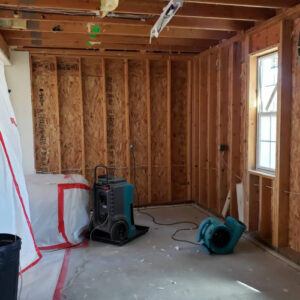
Bathroom water damage restoration runs through extraction, drying, and sanitizing. Water damage restoration crews pull the standing water out, find the moisture hiding in the subfloor and walls, then dry the structure with air movers and dehumidifiers until the readings come back where they should be. Deodorizing and sanitizing follow, which keeps odor and mold from showing up later.
The drying gets documented as it goes, so your insurer has evidence rather than a description. We can’t say in advance whether a particular floor or ceiling can be saved. That comes down to the material and how long it stayed wet, and anyone promising otherwise before looking is guessing.
Get It Checked Before You Decide It Dried
If it was clean water, you caught it early, and everything feels dry, you are probably fine. If any of it reached the ceiling below, soaked into carpet, or came up out of the bowl, have it checked with moisture meters. Tell us what happened through our contact page, including which room it reached and roughly how long the water sat. Our certified team works around the clock, every day of the year.
Frequently Asked Questions
Is water from an overflowing toilet dangerous?
It depends which side it came from. Water overflowing from the tank is supply water, the same as your tap, so the concern is damage rather than contamination. Water that comes up out of the bowl has passed the trap and should be handled as contaminated, even when it looks clear. That calls for protective gear and proper disinfecting, not a mop and a bucket of cleaner.
How long before an overflow causes mold?
Faster than most people expect. A damp subfloor under a sealed bathroom floor gives mold everything it wants. The surface drying does not mean the material underneath has. If a floor still feels damp the next day, or a smell starts up, have the moisture checked properly.
Will my insurance cover a toilet overflow?
Coverage comes down to your policy and the carrier holding it. A sudden accident is often included, while a slow leak that went unnoticed usually is not, so what you can show matters. Photograph the mess before you clean, and write down when it started. We work with all major insurance carriers, and the drying gets recorded as it happens so your adjuster has readings to review.
The ceiling below has a stain but feels dry. Do I still need it looked at?
Yes, worth checking. A stain means water got there, and drywall can feel dry on the painted side while the material above still holds moisture. Insulation in that cavity holds it longer again. A moisture reading settles the question in minutes, and catching it early beats a sagging ceiling later.